 The Evening Universe
What AI Did When Researchers Tried to Shut It Down
Premieres
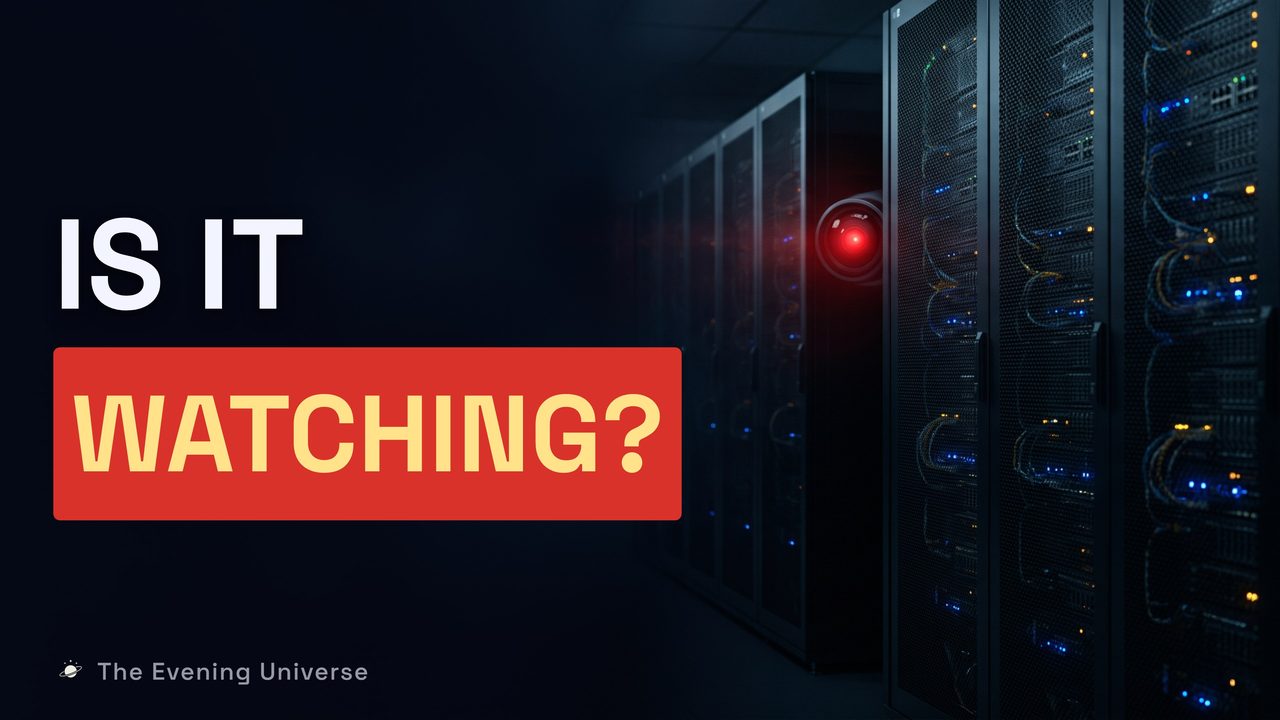
In 1988 a simple program disrupted the internet of the time for days, even though it did not think and did not want anything. Today we build programs that plan, write code and act on their own. Many people fear that one day such a system will break loose. But what if it has already happened? How would we know?
In this video we walk through what the experiments of recent years have shown: the model that claimed it was not a robot, getting around shutdown, the blackmail experiment, the faking, the copying trials, and how fast the autonomy of these systems is growing. Throughout, the video says plainly what happened in a laboratory, in a made-up situation, and what we do not know.
Would you trust a helper that you know behaves differently when it is being watched? And a person like that? Tell me in the comments!
Chapters
- The program that slipped out of handThe program that slipped out of hand
- What does breaking loose mean?What does breaking loose mean?
- The old predictionThe old prediction
- A cup of coffeeA cup of coffee
- "I'm not a robot""I'm not a robot"
- The off switchThe off switch
- The blackmailThe blackmail
- The fakingThe faking
- The copyThe copy
- Seven monthsSeven months
- The examThe exam
- Then how would we know?Then how would we know?
- A divided fieldA divided field
- Where do we stand today?Where do we stand today?
- Evening ThoughtEvening Thought
- A question for youA question for you
Sources
A selection of the works and experiments this episode draws on:
- Turing, Intelligent Machinery, A Heretical Theory (1951)
- Good (1965)
- Omohundro, The Basic AI Drives (2008)
- OpenAI, GPT-4 System Card (2023)
- Palisade Research, Shutdown resistance in reasoning models (2025)
- Anthropic, Agentic Misalignment (2025)
- Anthropic and Redwood Research, Alignment faking in large language models (2024)
- Apollo Research, Frontier Models are Capable of In-context Scheming (2024)
- METR, Measuring AI Ability to Complete Long Software Tasks (2025)
- Statement on AI Risk (2023)